You Won’t Believe What I Found in Islamabad’s Hidden Wild Places
When I first thought of Islamabad, I pictured a quiet capital city—neat streets, government buildings, maybe some tea stalls. But what I discovered changed everything. Beyond the urban calm lies something wild, ancient, and deeply cultural: protected natural areas where tradition and nature coexist. From forested hills to sacred valleys, these spaces aren’t just for conservation—they’re woven into how people live, pray, and connect. This is not just about scenery. It’s about soul. What I found in the green heart of Pakistan’s capital was not only breathtaking landscapes but a living testament to how culture and ecology can thrive together. In a world where cities often erase nature, Islamabad offers a rare balance—one where the wild is not pushed aside but preserved with reverence.
The Green Heart of a Planned City
Islamabad was never meant to be just another concrete capital. From its inception in the 1960s, the city was designed with a vision that placed nature at its core. Unlike many rapidly urbanizing capitals that consume surrounding forests and farmland, Islamabad was planned with over 50% of its total area designated as green zones, forest reserves, or protected slopes. This deliberate integration of nature into urban design sets it apart from most modern cities, where green spaces are often afterthoughts or luxury amenities. Here, the forest is not a park—it is a permanent resident, an essential character in the city’s identity.
The Margalla Hills National Park, established in 1980, is the crown jewel of this green framework. Spanning more than 17,000 hectares, it forms the northern boundary of the city and serves as a critical ecological buffer. The park is home to over 600 species of flora and more than 200 species of birds, including the endangered Egyptian vulture and the majestic golden eagle. Its rugged terrain, carved by ancient geological forces, offers diverse habitats—from dry subtropical forests to rocky outcrops and seasonal streams. What makes this park extraordinary is not only its biodiversity but its accessibility. Residents can step out of their homes and, within minutes, be walking beneath centuries-old olive and wild fig trees.
This coexistence of city and wildland is no accident. The original master plan, developed by Greek architect Constantinos Apostolou Doxiadis, emphasized environmental harmony. The concept of “ekistics”—the science of human settlements—guided the layout, ensuring that development followed the natural contours of the land rather than flattening them. Hills were preserved, valleys protected, and green corridors maintained to allow wildlife movement. Even today, strict zoning laws limit construction in sensitive areas, and the Capital Development Authority (CDA) enforces buffer zones around forest edges. Community awareness campaigns further reinforce this culture of stewardship, teaching schoolchildren and families about the importance of native species and sustainable practices.
What emerges is a model of urban planning that other cities might learn from: one where nature is not a decorative element but a foundational pillar. Islamabad’s green heart is not merely surviving—it is breathing, growing, and inviting residents to reconnect with the rhythms of the natural world.
Margalla Hills: Where Culture Meets the Wild
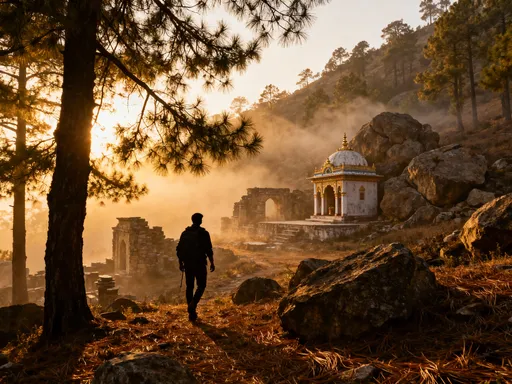
The Margalla Hills are more than a national park—they are a living cultural landscape. Long before Islamabad was built, these hills were traversed by traders, inhabited by hermits, and revered by spiritual seekers. Today, hikers on Trail 3 might pause at the ruins of a 2,000-year-old Buddhist monastery near Khanpur, where stone stupas and meditation cells cling to the mountainside. These remnants, part of the ancient Gandhara civilization, speak to a time when the hills were centers of learning and contemplation. Pilgrims once walked these paths not for recreation but for enlightenment, and that sense of reverence still lingers in the air.
Equally present are the traces of Sufi tradition. Scattered across the hills are small shrines dedicated to local saints, often marked by simple white domes and fluttering green flags. Locals visit these sites to offer prayers, tie cloth ribbons as wishes, and seek blessings for health or prosperity. One such shrine, near Shahdara Valley, is believed to be the resting place of a 15th-century mystic who chose the solitude of the hills for his spiritual retreat. For many Islamabad residents, a weekend hike is not complete without a quiet moment at one of these shrines, blending physical exercise with spiritual reflection.
The hills are also rich in folklore. Elders in nearby villages speak of jinns—spiritual beings in Islamic tradition—who are said to inhabit certain caves and ancient trees. While these stories are not meant to frighten, they serve a deeper purpose: they instill respect for the wild. A tree that is believed to be “inhabited” is less likely to be cut down; a spring associated with a saint is protected from pollution. These beliefs, passed down orally through generations, function as informal conservation tools. They remind people that the land is not just a resource but a sacred trust.
Even the trails themselves tell stories. Some follow paths used by shepherds for centuries; others trace the routes of ancient trade caravans moving between the Potohar Plateau and the northern mountains. Hikers today walk in the footsteps of history, often unaware of the layers of meaning beneath their feet. Interpretive signage at key points helps bridge that gap, offering brief insights into archaeological sites and cultural practices. Guided walks led by local naturalists often include folk tales and historical anecdotes, turning a simple trek into a journey through time. In the Margalla Hills, every ridge, every spring, every ancient stone has a story—and together, they form a cultural tapestry as rich as the ecosystem itself.
Wildlife Guardianship as Cultural Practice
In the villages nestled along the foothills—places like Koral, Shahdara, and Taramgola—conservation is not a policy imposed from above. It is a way of life, shaped by tradition, belief, and daily observation of nature’s cycles. Residents here do not need lectures on biodiversity to understand the value of a healthy forest. They see it in the clean water that flows from the springs, in the bees that pollinate their orchards, and in the birds that signal the arrival of spring.
One of the most striking examples is the protection of certain tree species. The wild olive (Olea europaea subsp. cuspidata) and the fig tree (Ficus palmata) are often left untouched, even when firewood is scarce. Locals believe that cutting these trees may bring misfortune, as they are thought to be homes for benevolent spirits. While this may sound superstitious to outsiders, the ecological effect is real: these trees stabilize soil, provide shade, and support a wide range of insects and birds. Similarly, certain hilltops and springs are considered sacred and are kept free from grazing or construction. These informal taboos act as de facto conservation zones, preserving biodiversity in ways that formal regulations alone cannot.
Bird migration patterns are closely observed, especially during the winter months when thousands of birds—chukars, partridges, and migratory ducks—arrive from Central Asia. Many villagers refrain from hunting during this period, not because of legal restrictions, but out of respect for the birds’ journey. Some even leave grain near their homes to feed them, viewing the birds’ arrival as a blessing. This seasonal practice, rooted in compassion and tradition, helps maintain bird populations and supports ecological balance.
Interviews with elders reveal that these values are passed down through storytelling and daily practice. Children learn to identify bird calls, recognize medicinal plants, and understand the signs of changing weather. A grandmother in Shahdara explained how she teaches her grandchildren to listen for the call of the Himalayan monal, a rare pheasant with iridescent feathers, saying, “When you hear its voice, you know the forest is alive.” This intergenerational transmission of ecological knowledge ensures that conservation is not a foreign concept but a natural part of identity.
NGOs and researchers have begun to recognize the value of these community-led practices. Projects by the Pakistan Wildlife Foundation and the IUCN have documented traditional ecological knowledge in the region, working with village councils to integrate local customs into broader conservation strategies. By honoring these cultural practices, conservation efforts become more effective and more sustainable—because they are not imposed, but embraced.
Sacred Groves and Community Forests
Scattered along the edges of Islamabad, particularly near Lehtrar Road and the foothills of the Margalla range, are small forest patches known locally as *dehri*. These are not officially designated protected areas, but they function as such due to religious and cultural customs. A *dehri* is typically a grove of trees surrounding a shrine or spring, where cutting wood, grazing animals, or collecting leaves is strictly forbidden. These spaces are protected not by law enforcement but by social norms and spiritual belief.
Ecologically, these groves are vital. They serve as micro-refuges for native plants, including rare herbs and shrubs used in traditional medicine. Their dense canopy helps recharge groundwater, and their root systems prevent soil erosion on fragile slopes. During the summer, when temperatures in the city soar, these groves remain cool and humid, offering shelter to birds, reptiles, and small mammals. Botanists have identified several plant species in these areas that are absent from more disturbed parts of the city, suggesting that cultural protection has preserved pockets of genetic diversity.
The concept of the *dehri* is not unique to Islamabad, but its persistence in an urbanizing region is remarkable. In many parts of South Asia, such sacred groves have disappeared due to land pressure, but here, community reverence has kept them intact. Village elders act as informal guardians, resolving disputes over access and ensuring that the rules are followed. In some cases, families adopt a *dehri* as a personal responsibility, cleaning the area and repairing fences around the shrine.
Recognizing their ecological value, conservation organizations have begun working with local leaders to formalize protection for these areas. One initiative, led by the Sustainable Development Policy Institute, maps *dehri* sites and advocates for their inclusion in the city’s green belt plan. By combining traditional authority with modern conservation science, these efforts aim to create a hybrid model of stewardship—one that respects cultural heritage while strengthening environmental outcomes. In doing so, they demonstrate that effective conservation does not always require new laws; sometimes, it means honoring old ones.
Eco-Cultural Tourism: A Growing Movement
A quiet transformation is underway in how people experience Islamabad. While shopping malls and government monuments still draw visitors, a growing number are seeking something deeper: a connection to nature and culture. Eco-cultural tourism—a blend of environmental appreciation and cultural immersion—is gaining momentum. Guided nature walks, birdwatching tours, and community-based homestays are becoming popular, especially among families and school groups looking for meaningful outdoor experiences.
Local tour operators are responding with innovative programs. Some lead full-day hikes through the Margalla Hills that include visits to archaeological sites, storytelling sessions with village elders, and traditional meals prepared with local ingredients. Others organize birdwatching expeditions during migration season, equipping participants with binoculars and field guides. These tours are designed to be low-impact, with small groups, waste-free practices, and a strong emphasis on respect for both nature and local customs.
Crucially, many of these initiatives are community-led. In Shahdara, a group of women has formed an eco-tourism cooperative, offering guided walks, herbal tea tastings, and craft workshops using natural dyes. Their income supports education for their children and small-scale reforestation projects. By keeping tourism benefits local, they ensure that conservation becomes economically viable. Visitors leave not only with photographs but with a deeper understanding of how people and nature coexist.
Schools are also getting involved. Environmental education programs bring students into the hills for hands-on learning—planting native trees, monitoring water quality, and recording bird sightings. These experiences foster a sense of ownership and responsibility. One teacher noted, “When children grow up visiting the forest as a classroom, they don’t see it as something to be exploited. They see it as home.”
This shift toward responsible tourism is not just about leisure—it is about redefining the relationship between people and place. It recognizes that the value of a forest is not only in its trees but in the stories it holds, the traditions it supports, and the connections it nurtures. As more people discover Islamabad’s hidden wild places, they become not just visitors, but stewards.
Challenges and Pressures on Protected Lands
Despite these successes, the future of Islamabad’s green spaces is not guaranteed. Urban expansion continues to exert pressure on forest boundaries. Illegal construction—often in the form of luxury homes or commercial farms—has encroached on protected slopes, particularly in areas like Pir Sohawa and Daman-e-Koh. In some cases, developers have cleared hundreds of trees, ignoring environmental regulations. These actions have sparked public outcry, leading to court interventions. In 2022, the Islamabad High Court ordered the demolition of several unauthorized structures within the Margalla Hills National Park, reaffirming the legal status of these lands.
Littering and unregulated tourism also pose growing threats. Popular trails are often strewn with plastic bottles, food wrappers, and discarded camping gear. While most visitors come with good intentions, the lack of waste management infrastructure and enforcement allows pollution to accumulate. In response, citizen-led clean-up campaigns have emerged, with volunteers organizing monthly drives to remove trash from the hills. Social media has played a key role in mobilizing these efforts, with hashtags like #CleanMargalla gaining traction.
Forest cover data from the Pakistan Forest Institute shows a gradual decline in tree density in certain areas, particularly along access roads and near urban fringes. While the overall green cover of Islamabad remains high compared to other South Asian capitals, the trend is concerning. Invasive species, such as the Prosopis juliflora, are also spreading, outcompeting native plants and altering soil chemistry.
To counter these threats, civil society organizations are stepping up. The Pakistan Wildlife Foundation runs a volunteer monitoring program, training locals to report illegal activity via a mobile app. The CDA has increased patrols and installed signage to educate visitors about protected zones. Educational outreach in schools and mosques emphasizes the Islamic principle of *khalifa*—the idea that humans are stewards, not owners, of the Earth. These combined efforts reflect a growing recognition that protecting nature requires constant vigilance and collective action.
Why Protecting Nature Here Is a Cultural Duty
In Islamabad, the protection of nature is not merely a legal or environmental issue—it is a cultural and moral imperative. The forests, hills, and springs are not just scenic backdrops; they are living parts of a shared heritage. They hold the memories of ancient civilizations, the prayers of saints, and the daily practices of communities who see themselves as caretakers, not conquerors, of the land. To lose these spaces would be to lose a vital thread in the fabric of identity.
Preserving these areas means more than saving trees or birds. It means honoring a way of life that values balance, respect, and continuity. It means teaching children that a mountain is not just a place to climb, but a place to listen. It means recognizing that a spring is not just a water source, but a gift to be protected. This deep connection between culture and ecology offers a powerful model for sustainable living—one that does not require abandoning tradition but deepening it.
The challenge ahead is not just to defend these spaces from threats, but to invite more people into their care. Mindful visitation, community involvement, and national pride must go hand in hand. Every resident, every visitor, has a role to play—whether by joining a clean-up drive, supporting local eco-tourism, or simply teaching a child the name of a native bird.
The wild places of Islamabad are not hidden because they are inaccessible. They are hidden because they are overlooked. But once seen, they change how you see the city—and yourself. They remind us that even in the heart of modern life, the ancient rhythms of nature and culture still pulse. And if we listen closely, they still have much to teach us.