Hidden Gems of Thimphu: Where Bhutan’s Soul Lives in Stone and Wood
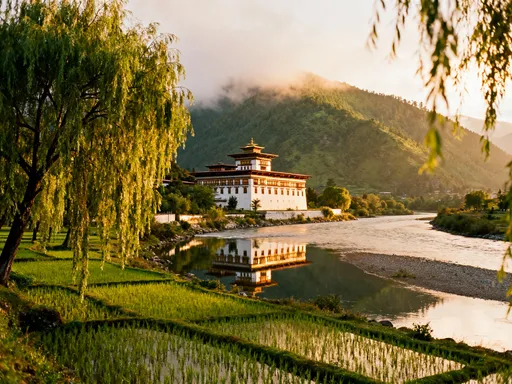
You know that feeling when you stumble upon a place so untouched, so quietly powerful, it stops your scroll mid-swipe? Thimphu, Bhutan, did that to me—not with grand monuments, but with the quiet elegance of its architecture. Forget cookie-cutter cities; here, every wall, roof, and painted window tells a story. This isn’t just design—it’s devotion carved in wood and stone. Let me take you where guidebooks rarely go. In a world where urban landscapes often erase identity, Thimphu stands as a quiet rebellion. Its buildings do not shout for attention. Instead, they whisper ancient values—harmony, mindfulness, continuity. This city is not preserved behind glass; it lives, breathes, and builds according to a centuries-old rhythm. What you’ll discover is more than aesthetics—it’s a philosophy made visible through architecture.
Beyond the Beaten Path: Rethinking Thimphu’s Architectural Identity
While many travelers flock to Paro with its iconic tiger’s nest or Punakha with its river-flanked dzong, Thimphu remains Bhutan’s quiet cultural anchor. As the nation’s capital, it could easily have surrendered to modernity, embracing glass towers and globalized design. Yet, walking through its streets feels like stepping into a living archive of Bhutanese tradition. The city’s architectural identity is not staged for tourists; it is lived daily by its residents. Unlike destinations that curate heritage for spectacle, Thimphu integrates tradition into the very fabric of urban life. This authenticity stems from a deep-rooted respect for cultural continuity, where architecture is not merely shelter but a reflection of national identity.
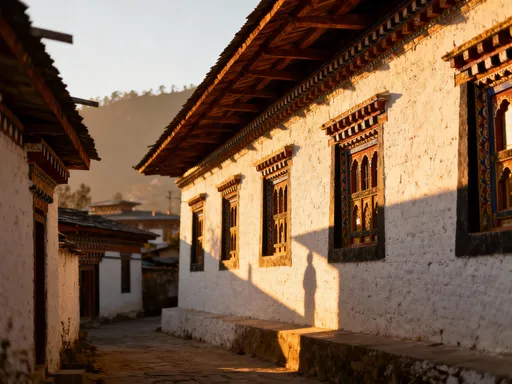
What sets Bhutanese architecture apart is its seamless fusion of function, spirituality, and environmental awareness. Buildings in Thimphu are typically constructed using rammed earth, stone, and timber—materials drawn directly from the surrounding Himalayan landscape. The sloping wooden roofs, often covered in slate or corrugated metal painted to resemble traditional forms, are designed to withstand heavy monsoon rains while allowing for natural ventilation. Casement windows, framed in hand-carved wood, are painted in vibrant blues, greens, and reds, often adorned with intricate patterns that carry symbolic meaning. These are not decorative afterthoughts; they are visual prayers, communicating blessings and protection.
Even as Thimphu grows, it resists the homogenizing forces of global urbanization. Newer structures, including government offices and residential complexes, adhere to the same architectural language. You won’t find skyscrapers here, nor do buildings compete for dominance in the skyline. Instead, height restrictions and design regulations ensure that the city maintains its human scale and visual harmony. This is not architectural stagnation—it is intentional preservation. In Thimphu, modernity does not mean discarding the past; it means reinterpreting it with reverence. The result is a capital city that feels both contemporary and timeless, where progress is measured not by height but by harmony.
The Rules Behind the Beauty: Understanding Bhutan’s Architectural Codes
The consistency and beauty of Thimphu’s architecture are no accident. They are the product of a deliberate national policy rooted in driglam namzha, Bhutan’s traditional code of etiquette and conduct. Originally governing dress, behavior, and social interaction, this code has been extended to architecture, ensuring that the built environment reflects the same values of order, respect, and cultural pride. Every building—whether a family home, a monastery, or a public institution—must comply with strict design guidelines that dictate form, color, materials, and ornamentation. This is not a nostalgic gesture; it is a living commitment to cultural sovereignty.
One of the most visible aspects of these regulations is the requirement for traditional rooflines. Flat roofs are prohibited in most areas; instead, structures must feature sloped roofs with overhanging eaves, often painted in earthy tones or dark green to mimic the surrounding forest. Windows must follow the classic Bhutanese style: double-hung, with wooden frames and latticework that allows light while maintaining privacy. The use of concrete and steel is permitted, but only when hidden beneath traditional finishes. Even utility boxes and signage are required to blend in, often painted with motifs or enclosed in wooden casings.
Color plays a symbolic role as well. Exterior walls are typically whitewashed, representing purity and peace, while wooden elements are painted in bold, natural pigments derived from minerals and plants. Red, often seen on religious buildings, symbolizes power and protection. Blue stands for healing and the sky, while green evokes nature and prosperity. These choices are not arbitrary; they are part of a visual language understood by locals and increasingly appreciated by mindful travelers. The government enforces these standards through local planning offices, ensuring that even private developments contribute to the city’s cohesive aesthetic.
This architectural discipline extends beyond Thimphu to towns and villages across Bhutan. It is one of the few countries in the world where cultural preservation is not left to chance or goodwill but is codified into law. While some might view such regulations as restrictive, in Bhutan, they are seen as protective. They prevent the erosion of identity in the face of globalization and ensure that future generations inherit a built environment that reflects their heritage. In a world where cities often lose themselves to fleeting trends, Bhutan offers a powerful alternative: beauty guided by principle.
Changangkha to Kawajangsa: Hidden Temples with Masterful Craftsmanship
While the towering Buddha Dordenma statue draws crowds with its grandeur, some of Thimphu’s most profound spiritual and architectural experiences lie in its lesser-known temples. Changangkha Lhakhang, perched on a ridge overlooking the valley, is one such gem. Built in the 13th century, it predates the city itself and serves as a living testament to Bhutan’s early religious architecture. Unlike the polished, restored temples often seen in tourist circuits, Changangkha retains its raw, weathered charm. Its stone walls, uneven and time-worn, speak of centuries of prayer and pilgrimage. The wooden doors, blackened by age and incense, are carved with protective deities and sacred mantras, their details softened but not lost to time.
Inside, the temple’s layout follows a classic Tibetan Buddhist plan, with a central shrine room surrounded by narrow corridors for circumambulation. The murals, though partially faded, depict scenes from the life of Guru Rinpoche and the mandalas of enlightened beings. What makes Changangkha special is its intimacy. With few visitors, you can sit quietly, feeling the cool stone beneath you, listening to the faint echo of chanting from a nearby monk. The craftsmanship here is not about perfection; it is about presence. Every chisel mark, every brushstroke, was made with devotion, not for display but for service to the sacred.
Another hidden sanctuary is the Kawajangsa Temple, located on the northern edge of the city. Less frequented and tucked into a residential neighborhood, it offers a rare glimpse into community-based worship. The temple’s slate roof, layered like fish scales, is a hallmark of traditional Bhutanese construction, designed to shed snow and rain while providing insulation. The khemar, or prayer wheel enclosure, that circles the temple is intricately carved with floral and geometric patterns, each section hand-finished by local artisans. Walking around it, turning the wheels filled with mantras, becomes a meditative act, connecting you not only to the spiritual but to the hands that built this space.
These temples are not museum pieces; they are active places of worship and community gathering. Their architecture supports their purpose—creating spaces that invite stillness, reflection, and connection. The use of natural materials, the orientation toward the mountains, the careful placement of windows to capture morning light—all are intentional, rooted in Vastu Shastra and Buddhist cosmology. For the discerning traveler, visiting these sites offers more than sightseeing; it offers a chance to witness how faith and form are inseparable in Bhutanese culture.
Living Streetscapes: Architecture in Everyday Thimphu
Some of the most beautiful architecture in Thimphu isn’t found in temples or museums—it’s embedded in the everyday. Neighborhoods like Lingzhi Road and Boedra reveal how tradition thrives in the ordinary. Here, homes, shops, and small monasteries coexist under the same architectural umbrella, creating a streetscape that feels organic and unforced. There are no theme-park recreations here; this is real life, built according to generations-old principles. Walking these lanes, you’ll notice the consistency of design: whitewashed walls rise beneath gently sloping roofs, wooden eaves project outward to provide shade, and brightly painted friezes run along the upper edges of buildings, depicting clouds, dragons, and floral motifs.
One of the most distinctive features is the overhanging second story, supported by wooden brackets carved with symbolic patterns. This design isn’t just decorative; it serves practical purposes. The overhang protects the lower walls from rain, extends living space without increasing the footprint, and creates shaded areas for sitting or selling goods. In summer, women might be seen spinning yarn on their handlooms under these eaves, while children play nearby. The architecture doesn’t isolate people; it invites interaction, fostering a sense of community.
Look closely, and you’ll see that even small details carry meaning. The painted eyes on stupas, known as the Eyes of Buddha, gaze outward in all four directions, symbolizing wisdom and compassion. Doorways are often marked with red ochre handprints or protective symbols drawn in charcoal, signs of daily rituals that blend the spiritual with the domestic. Window frames may be inscribed with mantras, their letters so small they’re easy to miss unless you’re looking. These are not tourist attractions; they are lived traditions, woven into the fabric of daily life.
What makes these streetscapes so powerful is their authenticity. There’s no performance here, no effort to impress. The people of Thimphu live in these homes, run businesses from these shops, and raise their families under these wooden roofs. Their architecture is not a costume; it is a continuation. For visitors, walking through these neighborhoods offers a rare opportunity to see culture not as a display but as a practice—one that values harmony, humility, and connection to place.
The Craftsmen Keeping Tradition Alive
Behind every beautifully crafted window, every hand-painted mural, every precisely laid stone, is a master artisan trained in one of Bhutan’s 13 traditional arts, known collectively as zorig chusum. These craftspeople are the unsung heroes of Thimphu’s architectural beauty. From woodcarving and painting to masonry and clay modeling, their skills are passed down through apprenticeships that can last a decade or more. Unlike mass-produced construction, Bhutanese architecture relies on their hands, eyes, and intuition. Each piece they create is unique, bearing the subtle imprint of the maker.
Woodcarvers, for instance, begin with rough-hewn timber and, using chisels and mallets, shape intricate latticework, door panels, and roof brackets. Their designs follow strict iconographic rules—lotus patterns for purity, dragons for protection, and endless knots for interconnectedness. Yet within these traditions, there is room for individual expression. A master might add a slight flourish to a vine or deepen the curve of a deity’s robe, making each piece a quiet signature. These carvings are not applied as decoration; they are integral to the structure, often serving as load-bearing elements or protective coverings.
Similarly, traditional painters mix their own pigments from natural sources—lapis lazuli for blue, malachite for green, cinnabar for red. They apply these with fine brushes made from squirrel hair, following ancient proportions and color codes that ensure spiritual accuracy. A mural is not just an image; it is a sacred object, meant to inspire devotion and convey teachings. Even the act of painting is considered a form of meditation, requiring focus, patience, and reverence.
These artisans are not relics of the past. They are active contributors to Bhutan’s present and future. Many work on government restoration projects, rebuild temples after landslides, or train the next generation in cultural schools. Some offer workshops for visitors, allowing guests to try their hand at carving or painting under expert guidance. Engaging with these craftsmen is one of the most meaningful ways to experience Thimphu’s architecture—not as a spectator, but as a witness to living heritage. Their work reminds us that tradition is not static; it is sustained through daily practice, skill, and devotion.
Modern Meets Traditional: How Thimphu Balances Growth and Heritage
As Bhutan’s capital, Thimphu faces the challenge of accommodating growth while preserving its cultural identity. The city’s population has increased, and with it, the demand for housing, infrastructure, and public services. Yet, unlike many capitals that sacrifice character for convenience, Thimphu has made a conscious effort to integrate modern needs within traditional forms. This balance is not always easy, and not every attempt is flawless, but the commitment is evident. The result is a city that evolves without erasing itself.
One of the most successful examples is the Folk Heritage Museum, a restored 19th-century farmhouse that now serves as an educational center. Rather than isolating it as a static exhibit, the museum demonstrates how traditional architecture functioned in daily life—how kitchens were arranged, how storage spaces were designed, how light entered through small windows. It shows that old ways were not just beautiful but highly functional, adapted to climate and community needs. The museum itself follows all traditional building codes, using rammed earth walls, wooden beams, and hand-carved details, proving that heritage techniques can meet modern standards of safety and accessibility.
Another example is the redesign of Thimphu’s weekend market, where vendors now operate from stalls built in the traditional style. The structures feature sloped roofs, wooden frames, and colorful paint, blending seamlessly with the surrounding neighborhood. This approach ensures that even commercial spaces contribute to the city’s aesthetic harmony. Similarly, new government buildings, such as the Ministry of Information and Communications, incorporate traditional elements—like carved window frames and symbolic motifs—into modern layouts, using reinforced concrete but finishing it with traditional materials.
There are challenges, of course. Some newer buildings, especially on the city’s outskirts, show signs of compromise—concrete structures with superficially painted facades or poorly executed carvings. These highlight the risks of tokenism, where tradition is applied as a veneer rather than a foundation. Yet, even these cases spark public dialogue about authenticity and responsibility. The government continues to refine its policies, offering incentives for builders who follow traditional methods and training programs for architects in vernacular design. Thimphu’s journey is not about perfection; it’s about intention. It shows that a city can grow without surrendering its soul.
How to Experience Thimphu’s Architecture Like a Local
To truly appreciate Thimphu’s architecture, you must slow down. This is not a city for checklist tourism. There are no timed tours or audio guides that can capture the quiet dignity of its streets. Instead, the best way to experience it is on foot, early in the morning or late in the afternoon, when the light is soft and the streets are quiet. Wander without a map. Let yourself get slightly lost in the narrow lanes of the Motithang or Kawajangsa neighborhoods. Notice how the sun hits a courtyard at dawn, casting long shadows across whitewashed walls. Listen to the sound of wooden shutters opening, the clink of teacups from a kitchen window, the distant chant from a small temple.
Engage respectfully. If you see an artisan at work, ask permission before taking photos. Many are happy to share their knowledge if approached with humility. Some cultural centers, like the National Institute for Zorig Chusum, offer guided visits where students demonstrate their crafts. These are not performances; they are glimpses into a lifelong dedication. Consider joining a walking tour led by a local architect or cultural guide. These tours often focus on design details most visitors miss—the symbolism of a painted frieze, the engineering behind a cantilevered roof, the way a doorway is aligned with mountain peaks.
Bring a notebook or sketchpad. Even if you’re not an artist, drawing a window frame or tracing a pattern helps you see it more deeply. Notice the repetition of motifs, the balance of color, the way nature is integrated—wood from local forests, stone from nearby rivers. These are not coincidences; they are choices rooted in respect for the land. Above all, travel with awareness. Support local businesses, stay in family-run guesthouses, and choose experiences that honor the community. When you do, you’re not just visiting Thimphu—you’re participating in its story.
Conclusion
Thimphu’s architecture isn’t just about how things look—it’s about how they belong. In a world of disposable design, Bhutan offers a rare truth: beauty rooted in meaning. Every beam, every brick, every hand-carved window is a testament to a culture that builds its values into its environment. This is not architecture for spectacle, but for living. It speaks of a society that measures progress not by speed or scale, but by harmony, mindfulness, and continuity. When you walk through Thimphu’s quiet lanes, you’re not just seeing buildings—you’re witnessing a philosophy made tangible. Go not to check a box, but to remember what place can truly feel like. Let the stillness, the craftsmanship, the quiet dignity of stone and wood remind you that home is not just where we live, but how we build it.