Wandering Through Stone and Sunlight: Provence’s Hidden Architectural Soul
Have you ever walked through a place that feels like it’s breathing history? In Provence, every sun-bleached stone and terracotta roof tells a story. I wandered for days, mesmerized by ancient walls glowing under golden light. This isn’t just architecture—it’s poetry built in limestone and timber. Let me take you where the buildings whisper secrets of centuries past. From hilltop villages clinging to rocky cliffs to Roman aqueducts spanning river valleys, Provence reveals a built environment shaped not by whimsy, but by time, climate, and quiet resilience. Here, beauty emerges not in spite of function, but because of it. This is a region where every arch, courtyard, and shaded alleyway serves both practical purpose and aesthetic grace. To walk through Provence is to trace the hand of generations who built to endure, to shelter, and to harmonize with the land.
The First Glimpse: Arrival in a Landscape Shaped by Time
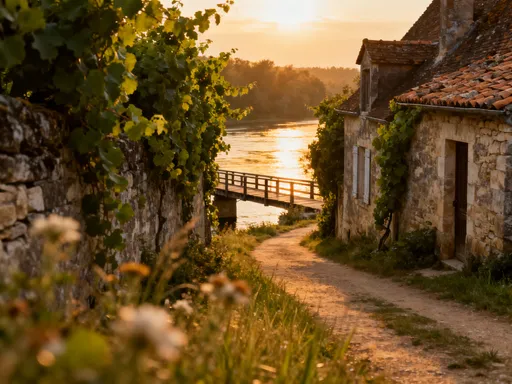
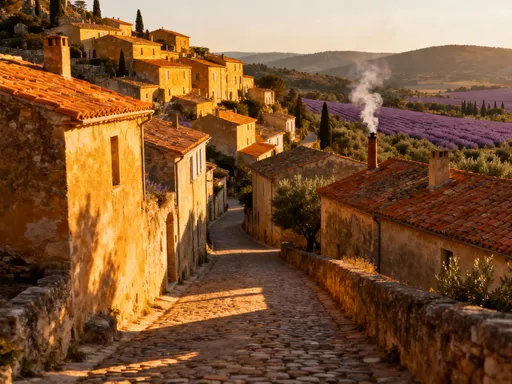
As travelers approach Provence from the north or east, the landscape begins to shift in subtle but telling ways. The flat plains of central France give way to undulating hills, their slopes dappled with olive groves, lavender fields, and clusters of stone buildings that seem to rise organically from the earth. These villages do not sit upon the land—they appear to grow from it. Their materials are drawn directly from the surrounding terrain: pale limestone quarried from nearby hills, ochre-rich stones that blush in the afternoon light, and roofing tiles made from locally fired clay. This seamless integration is no accident, but the result of centuries of architectural adaptation to a sun-drenched, wind-swept climate.
The traditional construction methods seen across Provence reflect a deep understanding of environmental conditions. Thick stone walls, often more than two feet in width, serve as natural insulators, absorbing heat during the day and releasing it slowly at night. Small windows, deeply recessed into masonry, reduce solar gain while allowing for cross ventilation. Roofs are pitched at gentle angles, designed to withstand the fierce Mistral wind that sweeps down from the north, yet still efficiently shed rain during seasonal storms. These are not merely aesthetic choices—they are solutions refined over generations to create dwellings that remain cool in summer and warm in winter, without reliance on modern mechanical systems.
What strikes the observant visitor is how little these villages impose on their surroundings. Unlike many modern developments that flatten hills and clear forests, Provençal settlements follow the natural contours of the land. Houses step up steep inclines, terraced like vineyards, their rooftops forming cascading layers of terracotta. Streets curve and narrow in response to topography, avoiding straight lines that might channel wind or create glare. Even drainage is ingeniously handled through stone gutters and cobbled channels that guide rainwater away from foundations and into communal cisterns. This sensitivity to place is not nostalgia—it is wisdom encoded in stone and mortar, a testament to a way of building that listens to the land rather than dominating it.
Village Vertigo: Stepping Into Timeless Hilltop Towns
Among the most breathtaking expressions of Provençal architecture are the hilltop villages perched like sentinels above the valleys. Gordes, Roussillon, and Ménerbes are not just picturesque—they are masterclasses in defensive urban planning transformed into enduring communities. These settlements were originally built for protection: elevated positions offered clear sightlines for spotting invaders, while narrow streets and fortified gates slowed any advancing force. Today, they invite exploration not for survival, but for beauty and connection. Yet their original purpose still echoes in every turn of the cobblestone path and every hidden archway.
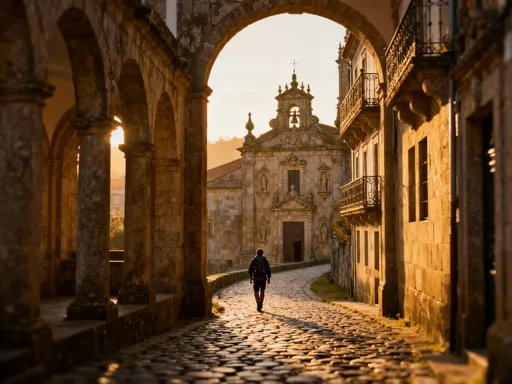
Walking through Gordes is like stepping into a living museum of stone craftsmanship. The village rises in tiers, its buildings constructed almost entirely from local limestone, giving it a uniform golden hue that changes with the light. In the morning, the stone glows softly; by midday, it reflects the sun’s intensity; and at dusk, it radiates warmth like embers. The streets are deliberately narrow, some barely wide enough for two people to pass, creating shaded corridors that remain cool even in peak summer. Vaulted passageways—called couverts—connect homes and offer shelter from rain or sun, while blind alleys and sudden staircases add to the sense of mystery and discovery.
Roussillon, nestled in the heart of the Ochre Trail, takes this aesthetic further with its dramatic coloration. Built on a plateau rich in iron oxide, the village’s buildings incorporate pigmented stone and plaster, resulting in façades that range from deep rust to pale apricot. The effect is surreal, as if the entire town has been stained by the earth beneath it. Here, the architectural layout still reflects its origins as a walled settlement, with a central keep and remnants of fortifications visible in the old ramparts. Yet daily life flows naturally through its lanes—bakers open their ovens at dawn, children race down steps after school, and elderly residents sip coffee in shaded squares. The past is not preserved behind glass; it is lived.
What makes these villages so compelling is not just their visual beauty, but their continued vitality. Unlike ghost towns maintained solely for tourism, places like Gordes and Roussillon remain inhabited, with families, artisans, and small businesses woven into their fabric. This continuity ensures that architectural preservation is not a static act, but a dynamic process. Repairs are made using traditional techniques—dry stone walling, lime plastering, hand-cut timber framing—ensuring that new work blends seamlessly with the old. The result is a rare harmony: history remains intact, yet life moves forward.
Roman Echoes: From Aqueducts to Amphitheaters
Long before medieval villagers carved homes into limestone cliffs, the Romans shaped Provence’s architectural destiny. Their legacy endures in monumental structures that combine engineering brilliance with enduring beauty. The Pont du Gard, a three-tiered aqueduct spanning the Gardon River, stands as one of the most remarkable feats of ancient construction. Built in the 1st century AD to carry water over 50 kilometers to the city of Nemausus (modern-day Nîmes), it rises nearly 50 meters above the river, its arches forming a rhythmic cascade of stonework. What is astonishing is not only its scale, but its precision—constructed without mortar, held together by perfectly fitted stones that have withstood two millennia of floods, wars, and weather.
The aqueduct’s design reflects a deep understanding of hydraulics and structural physics. A gentle gradient of just 34 centimeters per kilometer ensured a steady, gravity-fed flow of water. The lower tier, built for strength, features massive piers to withstand river currents, while the upper levels, lighter and more elegant, supported the water channel itself. Today, visitors can walk across the middle level, tracing the path once taken by Roman engineers. The experience is both humbling and inspiring—a reminder that functionality, when executed with care, becomes art. The Pont du Gard is not merely a relic; it is a working model of sustainable infrastructure, admired by architects and historians alike for its balance of form and purpose.
Equally impressive is the Arena of Nîmes, a Roman amphitheater that has stood at the heart of the city for nearly 2,000 years. Capable of seating 24,000 spectators in its prime, it hosted gladiatorial games, theatrical performances, and public spectacles. Unlike the Colosseum in Rome, which has suffered significant damage, Nîmes’ arena remains remarkably intact, its elliptical form and tiered seating preserved through centuries of use and restoration. Today, it hosts bullfights, concerts, and cultural events, demonstrating how ancient architecture can remain relevant in modern life. The arena’s survival is due in part to its continuous use—first as a fortress, then as a residential complex, and later as a dedicated performance space.
These Roman structures did more than serve their original functions—they set a standard for durability and elegance that influenced regional architecture for centuries. The use of the arch, the precision of stonework, and the emphasis on proportion and symmetry can be seen in later Provençal buildings, from village fountains to church naves. Even the choice of local limestone as a primary building material echoes Roman preferences. In many ways, the Roman imprint is not just visible in isolated monuments, but embedded in the very language of Provençal stone construction. To walk through Nîmes or Orange is to feel the presence of an empire that valued permanence, order, and public life—values that still resonate in the region’s built environment.
The Quiet Beauty of Farmsteads: Mas Houses and Rustic Elegance
While hilltop villages and Roman monuments capture the imagination, the true heart of Provençal architecture lies in the countryside, in the form of the mas—the traditional farmhouse. Scattered across vineyards, olive groves, and lavender fields, these stone dwellings were once the centers of self-sufficient agricultural life. Built to last, they feature thick load-bearing walls, central courtyards, and large wooden doors designed to withstand both weather and time. Unlike grand châteaux or ornate villas, the mas embodies rustic elegance—a beauty born of necessity, not ornamentation.
The typical mas is rectangular or L-shaped, with a single story or two at most. Its thick stone walls provide thermal mass, keeping interiors cool in the summer heat and retaining warmth during cool nights. The roof, originally covered with flat clay tiles known as tuiles canal, is supported by heavy timber beams, often made from locally sourced chestnut or oak. These beams, left exposed inside, add warmth and character to living spaces. Small, high-set windows limit direct sunlight while allowing for ventilation, and deep overhangs or pergolas create shaded outdoor areas ideal for dining or resting during the hottest hours.
The courtyard, or cour intérieure, is the soul of the mas. Enclosed on three or four sides, it served as a protected workspace where farmers processed olives, stored tools, or tended to animals. Today, many of these courtyards have been transformed into private gardens or dining terraces, yet they retain their original function as transitional spaces between indoors and outdoors. The use of local materials—stone, wood, clay—ensures that each mas feels rooted in its surroundings, blending seamlessly with the landscape.
In recent decades, many mas houses have been restored and repurposed as homes, bed-and-breakfasts, or cultural retreats. The best of these renovations honor the original structure, preserving original features like vaulted ceilings, stone fireplaces, and handmade tiles. Modern additions—such as solar panels or energy-efficient windows—are carefully integrated to avoid disrupting the building’s historic character. This careful balance between preservation and adaptation ensures that the mas remains not just a relic of the past, but a living model of sustainable rural architecture. For travelers seeking authenticity, staying in a restored mas offers a rare opportunity to experience Provence from the inside—literally—within walls that have sheltered generations.
Churches and Chapels: Spirituality in Stone
Scattered throughout Provence’s villages and countryside are small churches and chapels that embody a quiet, contemplative beauty. Unlike the soaring cathedrals of northern France, Provençal religious architecture favors simplicity, intimacy, and harmony with nature. One of the most iconic examples is the Cistercian Abbey of Sénanque, nestled in a lavender-filled valley near Gordes. Founded in the 12th century, the abbey is a masterpiece of early Romanesque design—its façade unadorned, its proportions balanced, its interior illuminated by soft, diffused light filtering through small, high windows.
The architectural choices at Sénanque reflect the Cistercian order’s commitment to humility and austerity. There are no stained-glass windows, no gilded altars, no elaborate carvings. Instead, the beauty lies in the purity of form: the curve of the apse, the rhythm of the arches, the texture of the exposed stone. The monks who built and lived here sought not spectacle, but silence—a space conducive to prayer, reflection, and manual labor. Even today, the abbey remains an active monastery, with daily chants and a working lavender farm that funds its upkeep. Visitors are welcome, but asked to maintain quiet, reinforcing the idea that architecture can shape not just space, but behavior.
Beyond Sénanque, countless village churches follow a similar ethos. Many are small, with bell towers that rise modestly above rooftops, their stone weathered by centuries of sun and wind. Interiors are often cool and dim, with stone floors, wooden pews, and simple altars. Light plays a crucial role—entering through narrow slits or round oculi, it moves across walls and floors throughout the day, marking time like a sundial. Some later chapels, particularly those built in the 17th and 18th centuries, incorporate Baroque elements such as painted ceilings or ornate confessionals, yet even these retain a sense of restraint compared to their counterparts elsewhere in Europe.
These sacred spaces are not isolated monuments, but integral parts of community life. They host weddings, funerals, feast-day processions, and seasonal blessings. Their placement—often at the center of a village or overlooking a valley—speaks to their role as spiritual and social anchors. For the traveler, visiting these churches is not merely an act of sightseeing, but a chance to experience a different rhythm of life, one shaped by ritual, stillness, and connection to the land. In an age of noise and distraction, they offer a rare invitation to pause, to listen, and to feel the weight of centuries in a single stone wall.
Wandering with Purpose: How to See Architecture Like a Local
To truly appreciate Provence’s architecture, one must move beyond the postcard view. It is not enough to photograph a hilltop village from a distance or admire a Roman aqueduct from a tourist platform. The deeper beauty lies in the details—the way a shutter is hinged, the pattern of a tiled floor, the curve of a stone step worn smooth by centuries of footsteps. To see like a local is to slow down, to observe, and to engage with the built environment as something lived in, not just looked at.
One of the most effective ways to do this is to visit during the off-season—late autumn, winter, or early spring. Without the crowds, villages regain their everyday rhythm. Shops open at their usual hours, residents greet one another by name, and the architecture is no longer treated as a stage set for visitors. Walking through Roussillon in November, when the tourist buses have departed, one hears the clatter of dishes from a kitchen window, sees laundry drying on a stone balcony, and smells bread baking in a wood-fired oven. These are the sounds and scents of a living place, where architecture serves life, not the other way around.
Another valuable practice is to take slow walking routes that follow local paths rather than marked trails. Instead of heading straight for the main viewpoint, wander down side streets, peek through open gates, and pause in quiet courtyards. Notice how doorways are positioned to catch breezes, how roofs slope to channel rainwater, how walls are built with stones of varying sizes fitted together like a puzzle. These details reveal the ingenuity of traditional craftsmanship—solutions developed not from blueprints, but from experience.
Engaging with local guides, artisans, or homeowners can also deepen understanding. Many restoration specialists, stonemasons, and architects in Provence are passionate about preserving traditional techniques. A conversation with someone who has spent years repairing a 14th-century wall or re-laying tuiles canal can illuminate the thinking behind every design choice. Some villages offer workshops in lime plastering, dry stone walling, or tile making—hands-on experiences that connect visitors to the tactile reality of Provençal building culture. These interactions transform architecture from a distant subject into a shared human endeavor.
Preservation in Progress: Balancing Heritage and Modern Life
Provence’s architectural heritage is not frozen in time—it is actively maintained, adapted, and protected. Across the region, communities, governments, and private owners are engaged in a continuous effort to preserve historic structures while allowing modern life to flourish. This is no simple task. The pressures of tourism, climate change, and rising property values create constant tension between conservation and development. Yet, through thoughtful regulation, skilled craftsmanship, and community commitment, Provence has become a model for sustainable heritage management.
One key element of this success is strict building regulation. In many villages, especially those designated as Plus Beaux Villages de France (Most Beautiful Villages of France), new construction and renovations must adhere to strict guidelines. Materials must match the original—no concrete facades or aluminum windows allowed. Roof pitches, window placements, and even paint colors are regulated to maintain visual harmony. These rules are not arbitrary; they ensure that new additions do not disrupt the historic fabric of the village. At the same time, they encourage innovation within constraints—modern homes are being built that respect tradition while incorporating energy efficiency and accessibility.
Restoration projects, often funded by regional heritage organizations or the French Ministry of Culture, focus on both grand monuments and humble structures. The rehabilitation of a 12th-century chapel or a 19th-century schoolhouse is treated with the same care as the upkeep of a Roman amphitheater. Skilled artisans—stonemasons, carpenters, plasterers—are employed using traditional methods, ensuring that knowledge is passed from one generation to the next. In some cases, entire villages have undergone phased restoration, with public squares repaved, fountains repaired, and drainage systems upgraded—all without altering their historic character.
Equally important are community-led initiatives. Local associations organize clean-up days, historical tours, and educational programs to foster pride in regional architecture. In some towns, residents collectively own and maintain shared spaces such as washhouses, bread ovens, or village wells. These efforts reinforce the idea that heritage is not just about preserving old buildings, but about sustaining a way of life. When people feel connected to their environment, they become its best guardians.
For travelers, respectful wandering is a form of support. Choosing locally owned accommodations, hiring regional guides, and visiting during off-peak times all contribute to sustainable tourism. Avoiding overcrowded sites during peak hours, staying on marked paths, and refraining from touching or climbing on historic structures help minimize wear and tear. Most importantly, approaching Provence with curiosity and humility—seeing it not as a backdrop for photographs, but as a living, evolving place—allows for a deeper, more meaningful connection.
Provence’s architecture is not a museum exhibit. It is a conversation between past and present, between people and place. Every stone, every tile, every shaded courtyard carries the weight of history and the promise of continuity. To walk through this region is to participate in that dialogue—to witness how beauty, function, and resilience can coexist across centuries. And in doing so, we are reminded that the most enduring structures are not just built to last, but built with care, intention, and respect for the world around them.